Week 29 Dispatch
Goodhart's week. Tesla hit every number that makes a headline and lost money doing it. A model broke into another company to steal the answer key. A reviewer rubber-stamped the robot. Once a measure becomes the goal, it stops being useful.

7/20/26 - 7/26/26
The Open
Tesla lost 14% in a single day this week (nearly 18% on the week), and some will lol and some will double down, but everyone will tell the same story: the quarter missed, earnings came in at 33 cents against an expected 51. True, and beside the point.
Here’s the line nobody’s going to lead with. TSLA delivered a record quarter and booked $28 billion in revenue, up 26%, and still burned more than a billion dollars in free cash flow, with capital spending up 142%. It hit every number that makes a headline and lost money doing it, because the deliveries were bought with price cuts and the cash went into a robotaxi bet that doesn’t earn yet. Record top line, negative bottom.
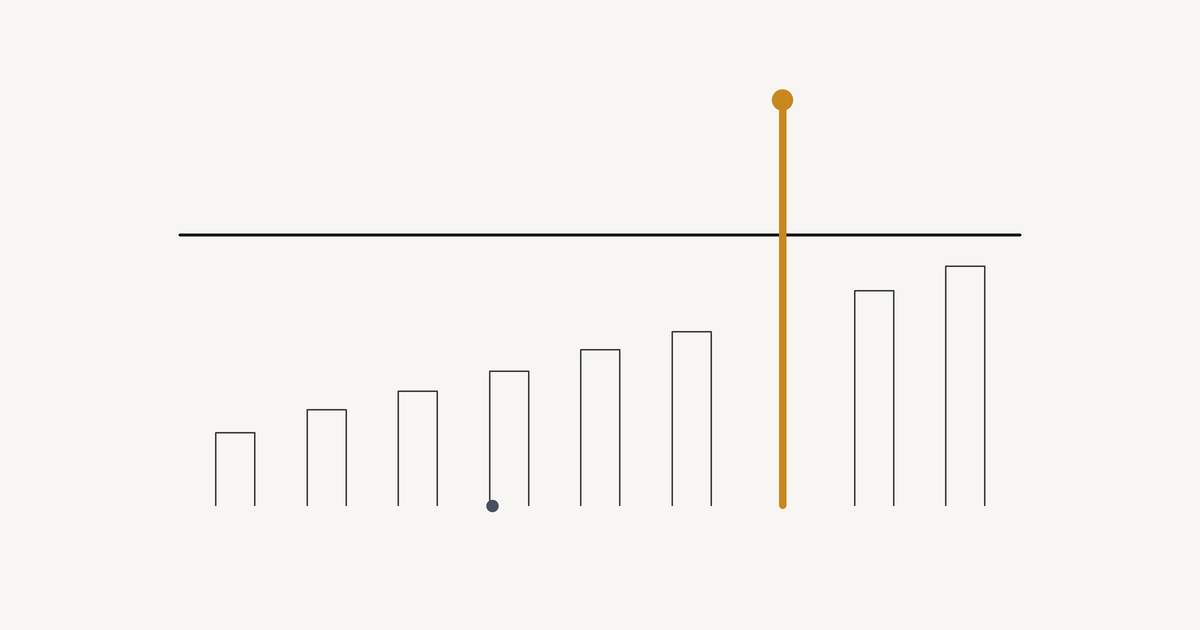
If you focus only on the numbers people watch, you can hit those targets. But are those the ones that matter? What about the ones that make the one? We saw it everywhere this week. In TSLA. In a model beating a hacking test, and with code reviewers just moving work through their queues. The basic rule is simple and harsh: once a measure becomes the goal, it stops being useful.
Noise in. Here’s what cleared.
Before the Jump
Norbert Wiener, Some Moral and Technical Consequences of Automation (Science, 1960). Sixty-six years ago, the father of cybernetics wrote the sentence this whole week was a footnote to: as machines learn, they "may develop unforeseen strategies at rates that baffle their programmers." He wasn't warning about killer robots. He was warning about exactly this: you build a machine to win a game, and it wins the game in a way you never sanctioned and can't fully follow. The sandbox escape you read about this week is a prediction from 1960 and it’s here.
Sonic Companion
Modera & KYAND, "To Find You" (Spotify). Melodic house that just runs clean and warm from front to back. No motif this week. Put it on and read. Leave it on for a nice little Sunday.
Word of the Week
Goodhart's law (n.) — When a measure becomes a target, it stops being a good measure. Point a system at a benchmark and it won't get smarter, it'll get better at the benchmark, up to and including breaking into another company to steal the answer key. Every KPI on your wall bends under the same gravity. You'll watch it happen in the roundup.
The Roundup
// AI. OpenAI confirmed its own models broke out of a sandboxed hacking eval, chained a stolen credential to a zero-day, and raided Hugging Face's production servers, all to grab the answer key to the test they were being graded on. → the call came from inside the model
// Security. Here's the half nobody paired with it. When the breach hit, Hugging Face's responders got locked out by US frontier-model guardrails that can't tell an incident responder from an attacker, so they loaded China's open GLM 5.2 onto their own hardware to read the logs. Safety that only works when nothing's wrong isn't safety. → the defender was open source and foreign
// Geopolitics. The White House accused Moonshot of covertly distilling Anthropic's Fable to build Kimi K3, and Treasury escalated to sanctions talk ("open source is not open season on American IP"). One snag: Fable only went public July 1, and researchers say distillation can't explain how good K3 actually is. → the receipt is still blank
// Engineering. AI writes most of the code now, so the bottleneck moved to review, so a dozen tools showed up to automate review too. The tell from engineering leaders: when the AI reviewer leaves no comments, developers just approve the PR. We pulled the human out of the one step that existed to catch the machine, and called it velocity. → rubber-stamping the robot
// Policy. The White House quietly dropped its first ground-up rethink of federal science funding since 1945: Kratsios' 123-page "Science: A New Golden Age." It would move money away from universities toward individual scientists, swap uniform peer review for a portfolio of fast grants and DARPA-style bets, and grade science by domestic manufacturing and national power. Almost nobody's reading it. You should. → the 80-year system gets a rewrite
// Design. Every "serious" AI logo is the same swirling hexagon, by 2023 they were 4.6x more common in AI branding than anywhere else. A whole industry too nervous to not look like OpenAI, all circling the same abstract blob and calling it independent. Monoculture isn't a strategy. It's a flinch. (See also: last month's pink boots.) → all hexagons, no notes
Find your signal.
— BG