Corporate Children of the Magenta Line
We're mistaking being good with the tool for being good at the job. The difference only shows up when the automation fails, and it will. Keep flying by hand.

A warning from a 1997 cockpit can teach us something important about how we train people to work with AI today.
The A/V system fails just before the room fills up. Your go-to model stops working on the morning of the deadline. The one person who really knows how everything works is unreachable on vacation. But you still get the job done, smoothly and without anyone noticing. That’s because you’re a professional, and at some point, you learned how to do the work without relying on the tool. We've all been there. And we've all seen the other version. The one where the support goes out, and the person is just… stranded. Not because they're not smart. Because the crutch was load-bearing and nobody told them. The castle of crutches collapses, and what's left standing is whatever ability they actually built, which turns out to be less than everyone assumed. Including them.
A Name from the Cockpit
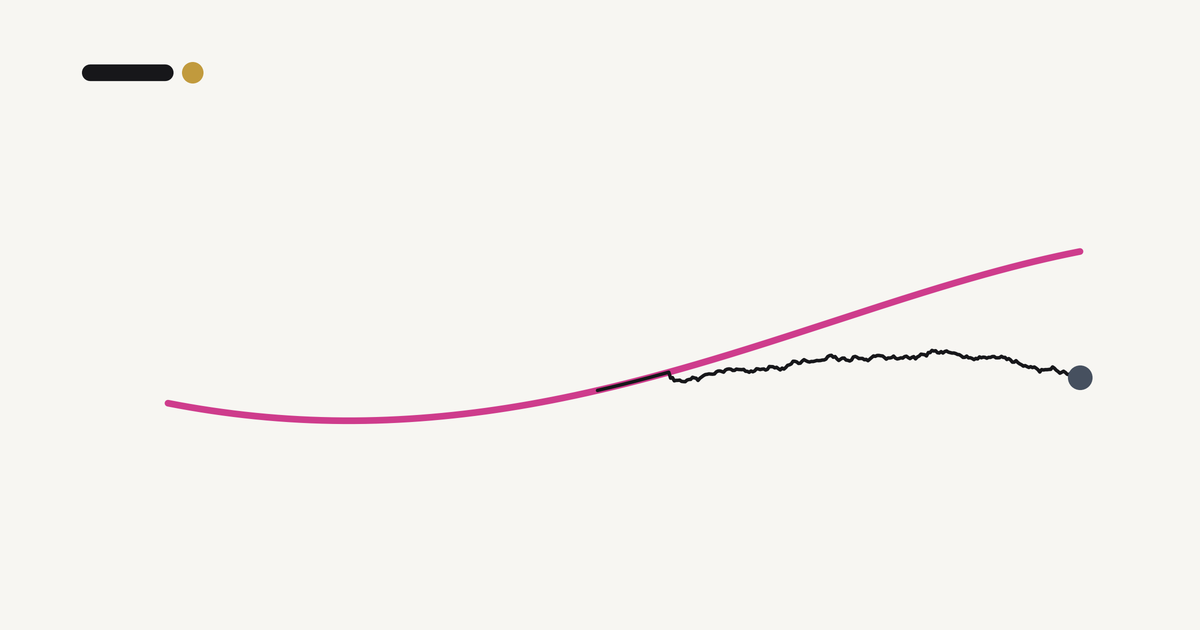
Aviation has a name for this. They earned it the hard way, decades before any of us typed a prompt. In 1997, Warren Vanderburgh, a training captain at American Airlines, gave a talk that pilots still share today. He noticed a new type of pilot: someone with all the right credentials and skills when things go well, but lost when things go wrong. Instead of flying the plane, they would try to fix the computer, focusing on the automation while the plane kept going as it was. He called them ‘children of the magenta line,’ named after the magenta course line the autopilot draws on the navigation display. Many pilots had learned to follow the line rather than actually fly the plane.The line itself was never the real issue.
The Irony Nobody has Improved On
If you want the theory behind this, in 1983, researcher Lisanne Bainbridge wrote a paper called "Ironies of Automation." Her main point still holds true: the better the automation, the less people practice their skills. Humans are kept in the loop for the rare times when automation fails. Reliability doesn’t remove the need for skill; it just hides it, lets it fade, and brings it back at the worst possible moment.
The Handoff
There’s a tough case study about this: Air France 447 in 2009, an Airbus A330 flying over the Atlantic. A simple sensor froze, giving the autopilot incorrect airspeed data, so the autopilot switched off and returned control to the pilots. The plane itself was fine. But the crew, flying manually at high altitude for the first time in a long while, misunderstood the situation and kept the nose up until the wings stalled. The plane crashed into the ocean.From what I’ve read, only 4 minutes and 23 seconds passed between the autopilot disconnecting and the crash into the Atlantic. Two hundred and twenty-eight people lost their lives.The airplane itself didn’t fail. The sensors might have, but the machine was working. The real problem was that the pilots’ skills, which automation had quietly replaced over the years, were no longer strong enough when needed.
The Corporate Magenta Line
You probably recognize this pattern because you’re experiencing a similar situation in your own workplace.The model[s] is our magenta line. It guides our work on screens, in drafts, presentations, analysis, and planning, and it’s genuinely effective. It’s trained on realistic, sometimes even personal, data. Most of the time, following it is the right choice. So we build our workflows around it, integrate it everywhere, and become faster and more efficient. That’s a good thing. I’m not saying you should stop using these tools. I’ve been discussing this since 2017, and I’m not about to stop now. That’s not the lesson from aviation, and it’s not what I’m trying to say. No one looked at the Air France 447 crash and decided to stop using autopilot.The real lesson is that we’re now training a generation of knowledge workers who start following the magenta line without knowing where it came from, why it exists, or where it leads. Instead of building skills first and then using tools, many people’s first real experience is with automation. They can use the technology well, but the real question is whether they can handle things when the automation fails. And it will fail, maybe not today, tomorrow, or during your big presentation next week, but eventually it will. The model might stop working, the problem could be truly new, or the output might be confidently wrong. Someone needs to recognize that. That’s the handoff, and it happens to everyone at some point, always without warning.
The Invisible Crutch
This is the part that worries me most. When the support is invisible, it’s hard to tell who is truly skilled and who just has good tools. On a normal day, their work looks the same. The difference only appears when things go wrong, and the support is gone. By then, it’s not a training problem; it’s a crisis that needs real skill. Right now, we’re confusing being good with the tool for being good at the job itself, and that mistake will catch up with us eventually.
Keep Flying by Hand
So what should you do? Aviation already figured this out, and the answer is simple but effective: pilots have to keep flying manually. Regulators added manual flying back into training because automation alone wasn’t enough to keep skills sharp. You need to practice the tasks you’ve automated, on purpose, when the risks are low, so you’re ready when the stakes are high.Outside of aviation, there are three habits you should build before you actually need them.
- Know which level of automation you're actually on, and know how to drop down a level on command. From "the model did it" to "I did it with the model" to "I did it".
- Keep flying manually sometimes: run the meeting without the deck, write the thing without the model, work a problem cold, not because it's efficient but because it's practice.
- When you're building a team, resist the urge to let people start at the top of the stack. The reps they skip are the reps you'll wish they had on the day it clicks off.
Next time the machine offers to take it, notice how automatic your yes has become. Then, every so often, fly it yourself. Not for nostalgia. For the day the line disappears, and it's just you and the airplane, and whether you're a professional or a child of the magenta line turns out to be a question you already answered, months ago.