The AutoTune Arc
Nobody declared spellcheck. Or Photoshop. Or Autotune. The AI watermark is the disclosure phase of an arc every tool travels, and the phase always ends the same way.

On August 11, Anthropic updated a support page and the internet noticed. Claude now embeds an invisible watermark in the text it generates. It survives copy and paste. Files get signed provenance metadata. No opt-out; it's applied at the model level and rolled out globally because the EU AI Act demanded marking and Anthropic couldn’t scope it by region. Every other major lab signed the same code of practice, so the rest are coming.
The backlash was immediate and loud. People railed against the idea that AI use in their work could be detected at all.
Here’s my position: I don’t care. When I receive something, I expect you to have used AI. If you didn’t, I’m mildly concerned about your throughput.
The panic isn’t really about the watermark. It’s about the assumption underneath the panic: that using the tool is something to hide, and being caught is something to fear. That assumption is wrong, and it’s wrong in a way we’ve watched play out at least four times before.
We have run this experiment
Nobody ever declared a word processor. Writers moved from typewriters to WordPerfect, and no publisher stamped “composed with digital assistance” on the title page. Spellcheck arrived and quietly fixed millions of errors that used to need a copy editor. Nobody demanded a disclosure line. Grammarly went further and restructured sentences wholesale. The market’s response: 30 million daily users, zero declaration norms.
Photoshop is a great case, because for about a decade we did demand disclosure. “Is it photoshopped?” was a real question with real stakes. Magazine covers got investigated. France passed an actual law requiring retouched model photos to carry a label. Then the question died. Retouching didn’t stop. The assumption flipped. Every commercial image is now assumed to be processed, and the burden of proof sits with anyone claiming otherwise. Unretouched became the label. The disclosure demand didn’t win; it inverted.
AutoTune ran the same arc, just faster. In 1998 it was a scandal with a name attached. By 2010 it was a genre. Today it’s on nearly every commercial vocal you hear; nobody lists it in the credits, and the artists who record without it say so loudly, because abstaining is now the marketing claim.
Research went through it too, and this one overshot. There was a moment when “I found it on Google” was a meaningful disclosure. Real research meant a library, a card catalog, an afternoon. Teachers banned Wikipedia citations. Serious people bragged about primary sources. Then the assumption flipped so completely that the tool became mandatory. The internet built a monument to the flip: a troll site called Let Me Google That For You, whose entire purpose was to humiliate people for not using the tool. That’s the arc’s final form. The scandal migrates from using the tool to needing to be told about it.
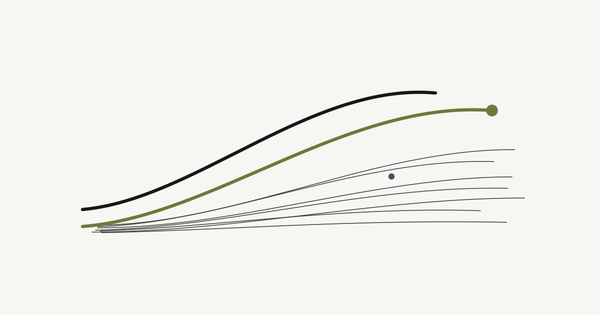
Let's call this pattern The Autotune Arc. The lifecycle every capability tool travels:
- scandal
- then disclosure demands
- then ambient assumption
- then a premium for abstaining.
Some tools run past the end of it, into the stage Google reached, where refusing the tool is the embarrassing thing. The tool never goes back in the box. The disclosure phase is not a destination. It’s the awkward middle. Everyone inside it believes it’s permanent. That’s the defining feature.
AI-assisted work is in the disclosure phase right now. The watermark news feels enormous because we’re standing in the middle of the arc. Zoom out and it’s Photoshop, 2009.
How the ink actually works
Worth thirty seconds on the mechanics, because the mechanics are where the whole declaration debate quietly falls apart.
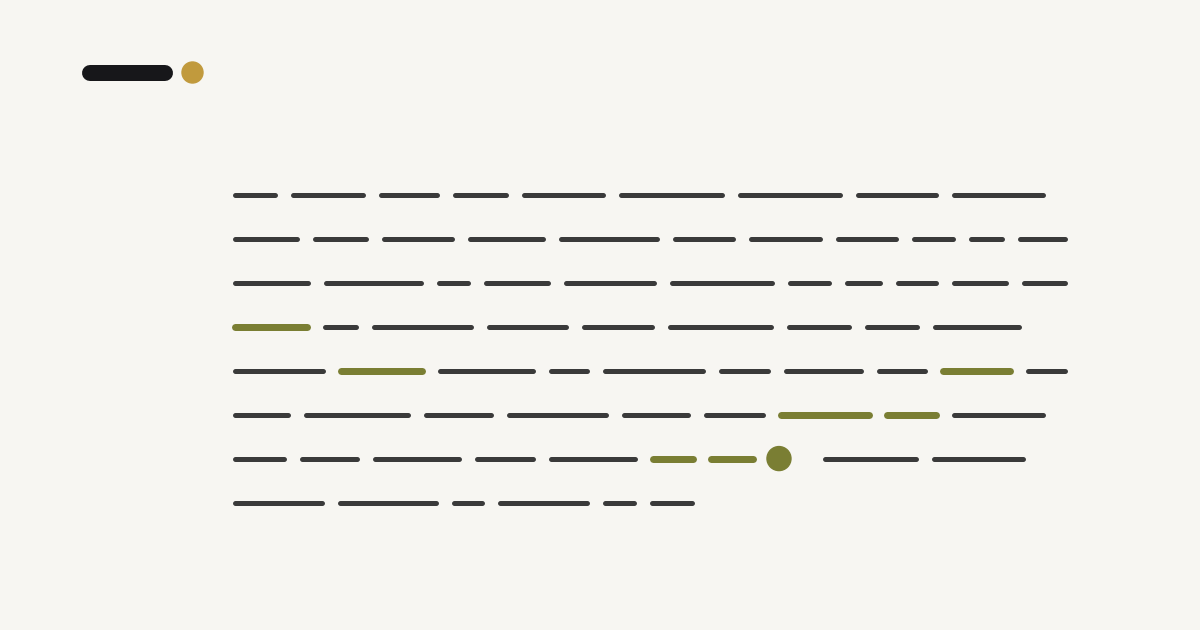
A language model writes one word at a time, choosing from a list of candidates. Many of those choices are coin flips. After “the sky was cold and,” the model could say “grey” or “overcast” and nothing about the sentence changes. Normally, a random number settles ties like that. The watermark replaces the randomness: instead of a coin flip, the model uses a secret key plus the preceding few words to settle each low-stakes choice. Nothing is added to the text. No hidden characters, no invisible ink in the literal sense. The words are the watermark. Anyone holding the key can later check whether a passage’s word choices are consistent with the pattern the key would have produced, and get back a probability that Claude was involved.
A probability. Not a verdict.
One more detail: Anthropic’s own explainer notes that third-party AI detectors work differently. Great.
The spectrum the mark can’t see
Here’s the problem the mechanics create for anyone who wants a clean answer. “Did AI write this?” sounds like a yes-or-no question. The reality underneath is a spectrum, and it runs something like this:
- Generated: you typed a prompt, shipped the output.
- Co-written: the model drafted, you restructured, cut, and rewrote.
- Consulted: the model did research, pressure-tested the argument, or outlined, and you wrote the words.
- Proofread: you wrote everything; the model fixed grammar.
- Untouched: no model in the chain.
Everything interesting about a piece of work happens between those stations. The watermark reads exactly one variable across all of them: what share of the surviving words did the model choose. That correlates loosely with the spectrum, but it collapses the two ends people most want to distinguish. Anthropic says so plainly: the mark cannot tell “Claude wrote this” from “Claude heavily edited this.” And it goes silent on the station that arguably matters most. A memo where the model built the argument and the human typed the sentences reads as clean. A memo where the human built the argument and the model typed the sentences lights up.
So the mark measures word-share when the thing you should actually care about is thought-share.
Those are different axes. Word-share tells you who picked “grey” over “overcast.” Thought-share tells you whose judgment you’re reading, who found the angle, who decided what to cut, who’s wrong if it’s wrong. No watermark reads that axis, because it doesn’t live in the words. It lives in the person who signed them.
That’s the frame I’d hand anyone building a policy on top of a detector: you are buying a dial that reads the least interesting variable, probabilistically, with a floor below which it reads nothing, calibrated so that silence proves nothing and a positive proves presence but not authorship. Set your thresholds knowing that.
What the watermark actually changes
Almost nothing, for the people worried about it. Something real, in the opposite direction of what they fear.
A watermark on everything is a signal that means nothing. Once every major model marks its output, and once AI touches most professional writing at some point between first thought and final draft, the mark becomes as informative as finding out a document passed through Microsoft Word. Detection tools will flag everything. A positive result that fires on 90% of documents isn’t a detector.
The information moves to the other side of the ledger. When the mark is everywhere, its absence becomes the claim. “No AI was used” becomes a boutique label, like organic, analog, and shot-on-film. Some buyers will pay for it. Most won’t. Either way, the disclosure flips from a confession you’re forced into to a boast you pay extra to make. People fighting the watermark are defending a stigma the watermark itself is about to kill.
I flagged the seed of this in last week’s Dispatch: presence and authorship are two different claims. Every lazy reader with a detector tab open will ignore the difference, and within a year the base rate makes their reading pointless anyway.
The question the declaration crowd is avoiding
Demanding a tool declaration is a way of avoiding the harder question: whether the work is any good and who answers for it.
A byline is a warranty. When my name is on a memo, I’m the one who’s wrong if it’s wrong. That warranty doesn’t get voided by the tools in the chain, and it doesn’t get strengthened by their absence. Nobody has ever caught an error in a financial model and accepted “Excel did that” as an answer. The spreadsheet was in the room. The analyst signed the work. Same rule, new tool.
This is where the declaration obsession is actively corrosive: it teaches people to evaluate provenance instead of quality. A mediocre take written by hand is still mediocre.
Signal out
The watermark is fine. The mark will be on everything, which means it will tell you nothing, which is roughly where spellcheck, Photoshop, and Autotune all landed. The declaration era is a phase, and we’re closer to the end of it than the noise suggests.
For the record, since we’re here: The Signal Chain runs on an AI-assisted workflow. Research, drafting, social posts (yes, there is an Instagram account), file maintenance, web development, etc. There’s your declaration. It has never once been the interesting question about this publication, and it isn’t the interesting question about your work either.
The interesting question is the same one it’s always been: is the take right, and will you sign it?
I sign mine.
Find your signal.
— BG