The Four Clocks of Your Professional Life
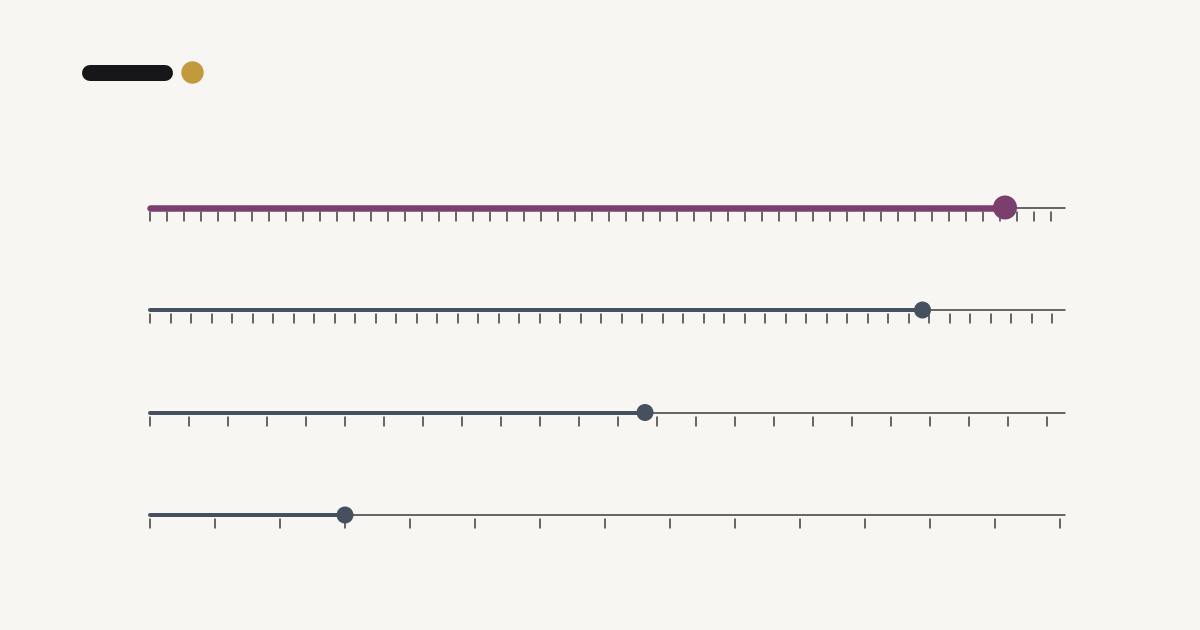
Time in your company now runs at four speeds: tech, expectations, culture, and the organization itself. Nothing breaks because one clock is fast. Things break in the spreads between them.

This week, somewhere in your company, three meetings will go badly for the same reason, and nobody in any of them will name it.
In the first, a business case comes back for better numbers, and an analyst rebuilds a three-year projection that everyone at the table knows is fiction. In the second, a sales lead commits to a delivery date because the client watched a four-minute demo and asked why it should take any longer than that. In the third, a governance committee approves an AI usage policy covering tools the staff quietly stopped waiting for a year ago.
Three rooms. Three documents. One cause.
Time in your company used to run at one speed. It now runs at four.
THE FOUR CLOCKS
The tech clock is fastest. Epoch AI tracked the price of a fixed level of AI capability and found it falling between 9x and 900x per year depending on which performance milestone you pick. On PhD-level science questions, matching GPT-4 got about 40x cheaper a year. On MMLU, matching it went from a blended $37.50 per million tokens when GPT-4 shipped in March 2023 to $0.18 by February 2025. Not $18. $0.18. Epoch flagged at the time that the steepest drops were the most recent ones and might not hold. They did not. By February 2026 Epoch had revised its own estimate to roughly 5x to 10x a year, which is where MIT FutureTech's independent work lands too. Slower than the headline, and I would rather use the number the source now stands behind. Still faster than everything else in this memo by an order of magnitude. You know this clock by its tell: something that was a conference demo at your last planning offsite is a line item on a vendor invoice by the next one.
The expectation clock is second. Your buyers set their expectations from the best demo anyone has shown them, not the best deployment anyone has finished, and demos travel almost at headline speed. McKinsey's global managing partner Bob Sternfels said in January 2026 that about a third of the firm's revenue now comes from underwriting outcomes, up from the quarter of global fees the firm cited two months earlier. Clients arrive with the result they want from a demo, and most of the fee rides on delivering it. Something I too a swipe at in When Time and Materials Go to Zero. One rung down the market, Agency Core's 2026 survey asked 400 clients directly and found 29 percent want a discount when AI is involved. Not after an audit of your process. After a demo. In fairness, the price has mostly held: Productive's agency-side numbers put the share that actually cut rates at 13 percent. The expectation moved first. It usually does. I wasn't around for the introduction of Email into the work place, but I do wonder if they suffered the same terrible conversations.
The culture clock is third, and it runs faster than your org chart believes. KPMG and the University of Melbourne surveyed 32,352 employees inside a 48,340-person sample across 47 countries. Seventy percent use free public AI tools for work. Forty-two percent use the ones their employer provides. Almost half admit to using AI in ways that break their organization's policy, at a time when only two in five say their organization has a policy at all. US Census Bureau researchers found the same shape in firm-level data fielded through January 2026: workers using AI on work tasks in 23 percent of firms against formal adoption in 18 percent, and of the firms where workers are already using it, 36 percent have adopted nothing officially at all. Their phrasing is drier than mine. Worker task use sometimes occurs without formal firm-level adoption.
The organization clock is slowest. Slower than its own employees. S&P Global surveyed more than a thousand enterprises across North America and Europe and reported in March 2025 that 42 percent had scrapped most of their AI initiatives, up from 17 percent a year earlier. The reasons given were cost, data privacy, and security risk, which is to say plumbing, permissions, and paperwork. Its 2026 wave does not restate that number, and the replacement is not better news: 37 percent of AI initiatives launched in the past year were live and delivering value. The rest sat somewhere between development and partial deployment.
Fastest to slowest: tech, expectation, culture, organization.
One caveat on that ordering before you lean on it. Only the tech clock has a rate anybody has actually measured. The other three I am ranking by how fast they respond when something changes, not by a velocity somebody clocked. If you want to argue the middle two trade places in your industry, I would hear it. The mechanism below survives either way.
PROBLEMS LIVE IN THE SPREADS
Here is the thing though. Nothing breaks because one clock is fast or another is slow. Things break in the spread between two clocks, or three, or God forbid where we find ourselves today, all four! And the wider the spread, the worse the break.
Every document your company runs on was designed for synchronized time. A plan locks its assumptions at approval and expects them to hold to the horizon. A contract makes a commitment at signature and expects the world it describes to survive to delivery. A policy draws a boundary and expects the work to stay inside it. All three assume the clock that wrote the document and the clock that executes it tick together. They no longer do.
The spread logic also explains the one place nothing breaks. The narrowest gap of all sits between the tech clock and the expectation clock, because demos travel instantly and cost nothing to watch. Your buyer is not tracking the frontier exactly. They are tracking the best demo they have been shown, which lags the frontier by a few months and moves almost as fast. That near-zero spread is why the buyer side of every negotiation now outruns the delivery side: your client synchronized to the fastest clock for free, while you are still paying to drag the slowest one forward.
WHAT THE SPREADS BREAK
Run the pairs and the problems fall out in order of spread width. Three are big enough to be their own pieces.
Plans. The tech-versus-organization spread is the widest, so planning artifacts break worst. Business cases, budgets, three-year strategies, anything that freezes its inputs at approval and then executes across a horizon those inputs will not survive. The assumptions in these documents now have a half-life shorter than the payback periods they underwrite. That one is next in this series, and it comes with a name for the mechanism.
Promises. The expectation-versus-organization spread breaks commitments. Contracts, SLAs, roadmap dates, sales pledges: deals struck at demo speed and honored at organizational speed.
You have watched this one happen. A prospect sees a workflow demo. Clean data, one system, four minutes. Your team scopes six weeks, because six weeks is roughly what the demo implies and nobody wants to be the vendor who says twelve. Week seven arrives and you are still chasing credentials for the second system, which is where the actual data lives. The date was set on the expectation clock. The work runs on the organization clock. The fee was fixed at signature, so the gap comes out of your margin, and the client's next email opens with "just checking in."
Nobody in that story lied. That is what makes it structural. Overpromising with no liars in the room, and the margin and the trust leaking out through the same gap.
Rules. The culture-versus-organization spread breaks governance, and it breaks it in a strange direction: inverted. Rules attach to the sanctioned system, and three in five employees cannot tell you a policy exists. Almost half have already broken one. Your policy is policing a building your employees no longer occupy. Your real exposure sits exactly where your rules are not. Personal accounts. Tools bought on expense. A browser tab nobody logs.
Two more spreads sit behind those.
Talent, where the market value of a skill now decays faster than the promotion cycle that prices it, so your comp bands are quoting last year's scarcity.
And measurement, where the KPIs agreed at a project's approval are measuring the wrong thing by its first review, and the review runs anyway. Both real, both in the queue.
THE PART NOBODY WANTS TO SAY
Watch what an organization does when it senses the spread. It announces that it will move faster. A transformation office. An AI task force. An accelerated operating model. Opinion, flagged as such: most of that is the slowest clock in the building cosplaying as the fastest one, and everyone inside can tell.
You cannot close the spread, because you do not control three of the four clocks. Tech, expectations, and your own people's private behavior all run on schedules you do not set. The only clock you own is the slowest one, and no amount of urgency theater makes an organization tick at model-release speed. Chasing synchronization is how the 42 percent spent their money. What you can change is the paperwork. Rebuild the documents so they survive the spread.
WHERE THIS COULD BE WRONG
Two outs, and I take both seriously.
First, the fast clock may already be slowing, and I do not have to speculate about that one. Epoch published the 900x figure in March 2025 and, eleven months later, put its own estimate for the cost of a fixed capability level at 5x to 10x a year. MIT FutureTech, working the problem independently, attributes only about 3x of the annual decline to algorithmic progress. The rest was hardware and price competition, and price competition is a market condition, not a law of physics. It can reverse. If the tech clock keeps settling, every spread narrows and the old documents recover some shelf life. My claim has a boundary: the spread is wide right now, and nobody can tell you the date it closes.
Second, this may be 1998. Organizations eventually metabolized the web. New roles, new cadences, new document types, and by the mid-2000s the clocks had partially re-coupled. Maybe the spread is a transition artifact and this decade's org charts absorb it the way that decade's did. I give this one real weight. It just does not help you this quarter, because you still have to run a company through the spread years, and the firms that came out of 1998 to 2004 intact were not the ones pretending time still ran at one speed.
THE BET
Speed is the losing frame. You cannot out-sprint a clock you do not own. The companies that come out of this ahead will be the ones that stop pretending the clocks agree and rebuild their three artifact classes, plans, promises, and rules, to survive the spread.
So here is what to watch for. The first company to openly run different planning cadences for different assumption classes: quarterly re-underwriting for anything touching the tech clock, annual for the human plumbing, and the nerve to publish the distinction. It will look like an operations footnote when it happens. It is the new org chart, arriving quietly.
The rest of this series (I think) will take the spreads one at a time, starting with the widest: what happens to a business case when its assumptions expire before its payback. That one has a date on it. Every plan does now.